Healey confirms funding for youth employment schemes
Written under time pressure on the day of budget release, as part of an NCTJ course task.
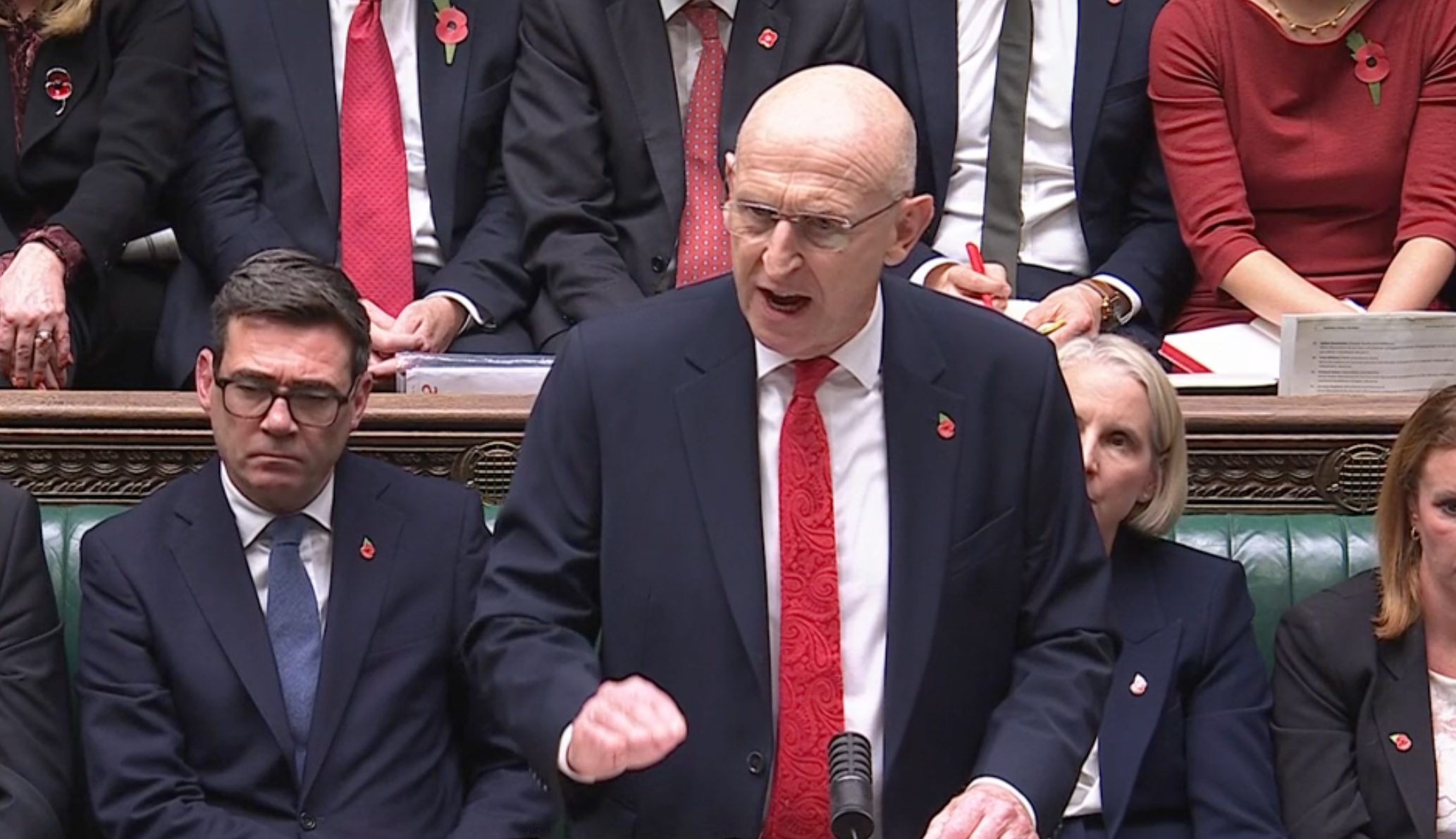
In today’s budget, Chancellor John Healey confirmed funding for measures against youth unemployment.
These included the previously announced Jobs Guarantee, and £100mn in investment in local apprenticeship services.
Healey told Parliament: “I refuse to write off a million young people like the last Conservative government did.”
He added: “As the Prime Minister said, we will bring down the welfare bill and we will do it in a Labour way.”
The Jobs Guarantee will guarantee 6 month paid jobs to eligible 18 to 24-year-old Universal Credit recipients who have been looking for work for 18 months.
It will also include a £3,000 Youth Jobs Grant, paid to businesses hiring eligible young unemployed people.
The budget also promised a £2,000 payment to small and medium sized businesses taking on new apprentices.
Conservative leader Kemi Badenoch fired back at the Chancellor, blaming the tax burden on businesses for falling employment.
Badenoch said: “Nearly half of businesses say they’ve cut employment because of Labour’s jobs tax.
“There are now fewer vacancies in the economy than at any point in the last twelve years outside the pandemic.”
She added that graduate vacancies were down almost 50% this year, making it the worst on record.
Figures from the Office for National Statistics (ONS) show a growing number of young people in the United Kingdom not in education, employment, or training (“NEET”).
They estimated that 981,000 16 to 24-year-olds (13%) were NEET between April and June this year.
While this marks a 30,000-person decrease from the previous quarter, it is the highest figure for the April-June period since 2013.
Healey also announced that former Health Secretary Alan Milburn will publish his final report next month.
The government will then set out their response before the end of the year, and legislation will follow next year, he added.
Last November, Milburn was commissioned by the government to review the drivers of youth economic inactivity.
In an interim report published this May, Milburn described a “chronic NEET problem” caused by failures across the health, welfare, education and benefits systems.
Milburn found that investment in benefits was being prioritised over employment support.
He wrote: “The UK’s approach for decades has been to pay the bill for a high structural level of youth inactivity, rather than invest in preventing it in the first place.”
This September, according to ONS figures, nearly 343 thousand people aged between 16 and 24 either claimed Jobseeker’s Allowance, or claimed Universal Credit while unemployed.
More than a third of these claimants lived in London, the West Midlands or the North West, with over 54 thousand claimants in London alone.
Healey also announced an increased business rate relief threshold for the retail, leisure, and hospitality industries.
The change will prevent 70,000 more businesses from having to pay business rates.
These were the same sectors highlighted by a Commons Library report this August, which linked the NEET crisis to falling employment in industries popular with young people.
Healey said: “Since day one, I’ve said that I’ll be a chancellor who champions the small British firms that give character to our communities.”
He added: “I want these businesses to invest, to recruit, to expand, and so today I’m taking action to support our high streets.”
All other businesses in these sectors will see their rates frozen for the next two years.
The budget did not include larger pay rises for workers between 18 and 20 years old, which Labour had promised in their 2024 manifesto.
Badenoch said she was glad to see the pledge broken.
She added: “That pledge was wrong, and breaking it was the right thing to do to help young people get jobs”